
SHAW JUNCTION
#159 - They were from Georgia. They lost everything when Sherman marched through during the Civil War. Their mother got sick and died. Their father went crazy and took off not to be seen again.

Welcome to Before I Forget . .
I’m glad you are here. Thank you for your time.

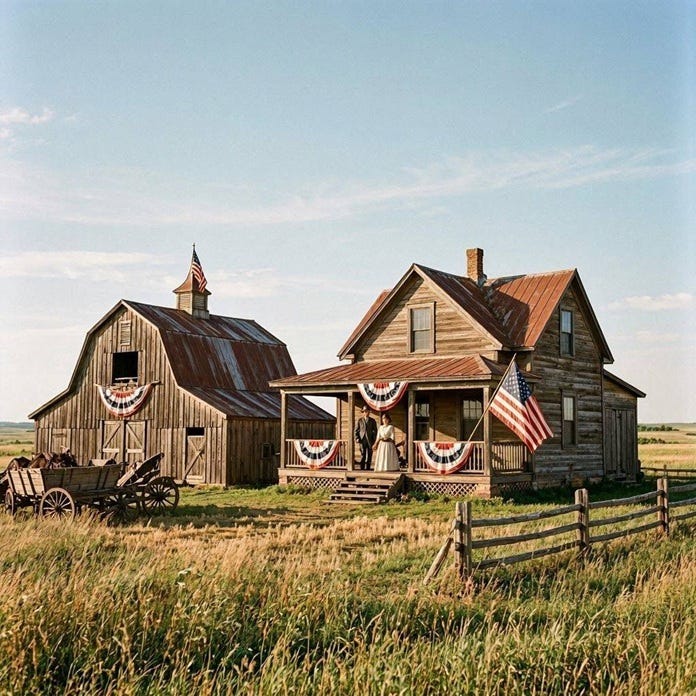
SHAW JUNCTION
In 1873, the fourth abundant year of crops had come in, and the Shaw family had made substantial progress in their homesteading endeavors.
Will now has two employees working for him. Frank and his younger brother, David. They lived with the Shaw’s in an outbuilding next to the barn.
They were from Georgia. They lost everything when Sherman marched through during the Civil War. Their mother got sick and died. Their father went crazy and took off not to be seen again.
They moved west and in San Antonio and worked at a cattle ranch.
David, being too young at the time to work the cattle, found his place helping the cook and became a good cook himself.
After two trail drives north to the railroad, they stayed in the Kearney area deciding to homestead.
It was a struggle for them. They had trouble with the cattle drives during the growing range war. The irony was that they were now on the receiving end of the damage done by the cattle to private land and crops.
The days of open range were coming to an end.
A locust outbreak decimated their crops. Locusts were an ongoing problem in the region. They had too little money to start over, and they let their homestead go.
They were about to depart by train heading west when they met Will. He was in Kearney getting supplies. He offered them a job.
Frank worked with Hugo on their two hundred acres of wheat, barley, and corn.
David, now fourteen, helped with the growing sheep herd. There were a hundred and fifty sheep on a hundred and fifty acres. Fifty more were on the way.
He also helped Anna with the cooking chores and often prepared whole meals by himself. Carrie found reason to “help” him on such occasions. Now a preteen, she had taken a liking to “Davie.”
Will got a female Anatolian Sheepdog watchdog from a man in St. Louis. Jackie was now two years old and had adopted the herd as her own, protecting them from the wolves and coyotes. A just purchased male pup from the same man was learning the ropes from her. Will wanted to breed them.
David could also help with the ongoing projects around the farm. There was always fencing to put up and repair. They built a barn.
Will was undecided as to what to do with his remaining acreage. He had close to three hundred acres fully fenced. For the time being, he rented the fields to local cattlemen for grazing.
Willie and Carrie had their own enterprise going. At a young age they had a knack for business.
Carrie was a born salesman.
They were raising chickens for their meat, chicks, and eggs, rabbits, a few goats, and pigs. They also served as frontmen for Will’s sheep and lambs.
They also had a month-old calf they were bottle-feeding. It had been rejected by its mother. A litter of barn cats, indispensable for controlling barn rats and mice, were free to whoever would take them.
The area was filling up, and settlers bought from them instead of going the further distance into Kearney. Both for the meat and for beginning their own stock. Plus, they sold vegetables from Anna and Carrie’s ever-expanding gardens.
One morning as Will and Willie hitched up the wagon for a trip into town, Carrie said “Pa, we should start our own feed and supply store.”
His growing-up little girl was always thinking.
And she was right, he thought. There are many settlers around now. I could save us all the time it takes to go up to Kearney.
“Caroline Shaw,” he said, looking at her. “That is a very good idea!”
And just like that, he pivoted from wanting to raise livestock to being a supplier of goods. His whole plan for the future changed with Carrie’s timely idea.
He had the money he needed for a start. And he could get a loan if he wanted. Instead of purchasing more sheep as he intended to do, he could use his sheep as collateral.
The sheep he had would suffice for the time being. Selling the wool to a larger market and their lambs and meat locally would be an efficient way to do things.
He could get all thing needed to farm and use his acreage for growing alfalfa for livestock feed. Cattle ranchers would have a nearby winter source of hay.
He would need a couple of mules or able horses.
Tack was needed for horse and wagon. Household necessities, food stores, and hardware.
And the new fencing, barbed wire, would be available soon.
He was certain this was the way to go. It would take time to get it going, but they could start. Timing is everything.
They set up the barn to showcase the goods.
Shaw’s Tack ‘n’ Feed Supply was born. It was early fall.

By summer of ‘84, Will and Anna had accrued a significant amount of debt in putting it together. Their sheep and land served as loan collateral, and their savings were stretched thin.
But and by all accounts they could make it work.
Will, Willie and Rudolph, “Randy,” made two trips a week into Kearney and to the railroad to pick up supplies and equipment he’d ordered from Omaha and St. Louis.
Randy, a year younger than Willie, was as tall as him already and was gaining on Will. He took after Anna’s side of the family.
On a sad note, Anna and Hugo’s father, Mr. Gustafson, had taken ill. Partly from old age and hard work but still, it was odd with no other visible cause. There was great concern for him.
On a happier note, Hugo married one of the Anderson’s girls, and they were expecting a newborn in the fall.
One other thing was necessary to complete the store’s setup. A blacksmith and saddler.
Will knew a man named John Ames. He’d learned the crafts as a young man and slave in Louisiana on a big plantation. He escaped, fled north, and joined the army where he and Will met.
He was a soldier attached to Will’s telegraph unit. They hit it off and kept in touch.
James was now in Philadelphia. Steady work was hard to find. He and his young family were struggling.
Will convinced him to come west with an offer to buy his train tickets and the equipment he needed to set up a blacksmithing shop there at the store. He would provide room and board and pay him top dollar.
They arrived in March. James, his wife Maddie, their two boys, Joshua, seven, and Caleb, five, and little girl, Sarah, three.
Things were up and running.

The family welcomed a baby girl, Barbara Lynn, to the family on the first day of spring.
The place was abuzz with multiple projects working at the same time. Spring wheat and barley were approaching maturity; garden tending yielded produce for sale and for the root cellar. Sheep were sheared for buyers in St. Louis, lambing, and the store. And building living quarters for the crew.
Homesteaders, now neighbors, frequented “the Tack ‘n’ Feed Supply” and the farm was being referred to as Shaw Junction.” The animal farm was a hit with the kids.
Anna and Carrie were schooling area kids when possible. The time had come for a school and schoolmarm a preacher, and a doctor.
Will and Anna hosted a party for the July 4th celebration.
There were flags and bunting, tents and games, and food cooked by Davie, drinks and oratory by those inclined.
The normally serious-minded settlers were ready for a good time.
Kids took to the animals and chasing around while the teens scoped each other out, making friends, and flirting with the gals.
Men played horseshoes and displayed their shooting prowess, and the women talked about what women talk about.
James could play the fiddle and with a couple of neighbors who brought their guitars along, there was dancing.
Will thanked the guests for coming. With a reminder about what the holiday was about, and a prayer to give thanks, black powder fireworks explosions capped the evening. A good time was had by all.
Standing alone arm in arm in the dark and looking up at the sparkling star-strewn sky, Anna told Will she was pregnant again.
Will said, “That’s it!” Anna said, “Eight’s enough!” They both laughed.

Willie was in the corral brushing Marybelle when Frank came in from the fields, riding hard along the fence line on the mule.
He pointed west. Above the horizon and stretching north to south, the sky was black and coming at them like a dust storm.
Having seen them before, Frank screamed, “Locusts are coming!” There was fear in his eyes.


Thank you for reading Before I Forget . . !
For my new Subscribers - a post from Sept. 15, 2023.
A PLANE, A JALAPENO, AND A PARACHUTE

#64 - My wife, her nephew, Akira, and his friend, Kentaro, both 12 years old and visiting from Japan, and I, flew down to Acapulco to meet my mother, brothers and sister for a get together.
Image by DALL-E 3
I really like this series. So many people know so little about the people who brought us the lifestyle we enjoy today.
I did not have "Swarm of Locusts" on my bingo card. The hardships our forebears endured are all but forgotten in our time. Strange but they seemed to live happy and productive lives nonetheless.