
THE MAIL WAS RUNNING LATE
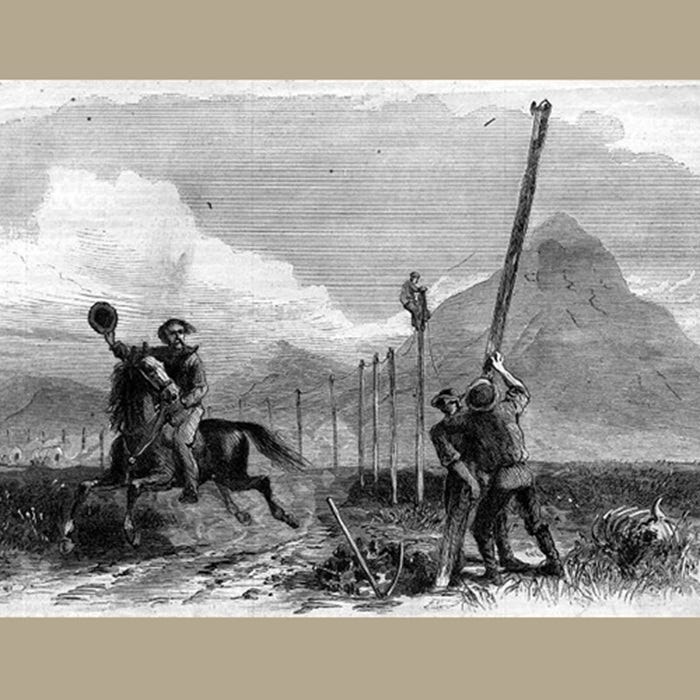
#145 - Riders met, flying by in opposite directions day and night. Camaraderie amongst the riders was a big thing. They would pretend a revolver draw and from the hip, fire a ‘thumbs up’ and a smile

Welcome to Before I Forget . .
I’m glad you are here. Thank you for your time.

THE MAIL WAS RUNNING LATE
Will stopped at the Fort Kearney Pony Express station before heading to St. Joseph.
“You don’t have to go to St. Jo to apply. You can sign up here. Your folks know what you’re doing?”
“No, they died with the fever.”
“I see. Well, that’s a shame, young man.
“Can you start in the morning?”
“Sure can.”
“Sign here. I’ll get your revolver, two if you like, knife, canteen, and Bible. You can carry your rifle or one of ours. Most riders go as light as possible for the horse’s sake.
“You can stable your horse here.
“That’s an 1855 Colt revolver rifle, isn’t it? Sure is nice. I’ll lock up your stuff. It’ll be safe. Find a spot inside to bunk down.
“Better rest up. You’ll do an out and back to Scottsbluff to see how you like it. It’ll be a two, three day run.”
“Okay. I’ll be ready.”

Will was off and running on a bright and clear late July morning. He was further west than he’d ever`been and relished the newness of it all.
After a few hours rest at the end of a 100-mile or so ride, and he was off again. To Scottsbluff and back in just over two days.
He was bow-legged from riding for so many hours. He was mighty sore and stiff. The new kid was paying his dues and on the butt end of friendly banter.
He got a night’s rest and was on his way east to St. Jo., another two or three day out and back.
Riders had set routes. He would have liked either one. He thought he could get home often.
In his first two months he made both trips numerous times with no time off.
Then, he made it to Fort Laramie twice. The trail goes north, skirting the Rocky Mountains Front Range. Even from a distance the mountains loomed tall and intimidating.
Much of the trail was now wired for the soon-to-come telegraph. Many telegraph offices were in or adjacent to the main Pony Express stations.
Along this trail section he came up on huge herds of Buffalo, one time stopping him for a couple of hours as the mass blocked the trail. They would knock down telegraph poles and wire in their passing.
Indians would do the same. They were still angry though the Indian wars of the previous year had subsided as the Indians realized the inevitable.
The linemen were kept busy.
He remembered Mr. Gustafsson’s advice to work for the telegraph company.
On his second trip to Laramie, Will found out that the eastbound rider who would return to Salt Lake City had taken a fall. Fortunately for him, he was only a few miles from the fort.
He broke a couple of ribs and wrenched his ankle. He had to put the horse down as it broke a leg. It took him better than half a day to limp in, mochila in hand.
Fort Laramie was a home station and turnaround point for the riders, as were all home stations.
They were usually spaced two fifty to three hundred miles apart with relay stations for fresh horses, every 10-15 miles between. Riders ran 75-100 miles per shift. They ate, got a few hours’ sleep, then got up for another shift.
Schedule adjustments were always being made, a case of having an extra rider or having none.
The mail was running late.
Will took off for Salt Lake City; it was three-four days distant. A long haul. Sleep would have to wait.
The Wyoming Territory is higher in elevation and cold at night, even for the second week of October.
But Godly beautiful with its stark, windswept, vastness that at night held the blackest sky and all things Heavenly.
Riders met, flying by in opposite directions day and night. Camaraderie amongst the riders was a big thing. They would pretend a revolver draw and from the hip, fire a ‘thumbs up’ and a smile as they passed.
Though hard to know for sure, this ‘gesture’ was attributed to “Pony Jim,” well-known to the riders and those along the trail.
Pony Jim had the longest ride and the fastest ride on the trail, was one of the riders who carried President Lincoln’s Inaugural Address to Sacramento and once took an arrow to the shoulder and one to the jaw. It took out several teeth. He made the next station but still a couple of days passed before he received treatment.
He’d be famous one day.
Down from the high country, Will got to Salt Lake City mid-morning, exhausted but amazed at the land he was seeing.
He got to sleep most of the day and night and was up early to get the east-bound mail from the rider due in at any time.
He would have liked to have seen more of the country; it was a lot of dessert and high dessert all the way to California, but also the area most prone for Indian trouble.
He was okay with heading back east.
He heard a rhythm-like “click click clicking” through an open door in the stable.
Looking inside, it was the telegraph office. A young man was at what Will surmised was the telegraph machine.
The fellow looked up.
Will said, “Good morning. You’re at it early. What are you doing?”
He said, “Hey. Yeah, I’m in early. I’m practicing. Come in.”
Orson Kimball, an enthusiastic young man, was to be the operator.
He said, “It will only be a few weeks before all the line is up, and the Transcontinental Telegraph will open for business.
“Then, the Pony Express will fold, as you probably already know. They’re already broke; the telegraph will be faster and cost less.
“You can get a job with the telegraph and be a lineman, that will be easy enough but if you were an operator like me, you’d have a real good job. And out of the weather. We’ll need operators up and down the line.“
Again, he was reminded of what Mr. Gustafsson said.
“How’s that thing work?” Will said, pointing to the small wired-up machine.
“It’s a code, the Morse Code. It’s easy. Tap this key here, with a short pause between taps, or a long one, depending on the letter. Listen to the clicks.”
Tapping the key, he tapped - three short, three long, three short. “That’s ‘S-O-S’, for ‘HELP’, right?
“Here, try it,” to which Will tapped out ‘S-O-S.’ He smiled.
“Listen here.” - Tap short pause, Tap long pause. “That’s the letter ‘A.’
“Each letter is assigned a sequence of one to four taps, short pauses or long with a slightly longer pause at the end of each letter. Numbers have a five click sequence. It’s easy. Just string letters together to make the words and sentences. In time, you’ll get faster.
“On paper, or vocally, it’s dot, dash, or dit, dah.
“You’ll be receiving as well as sending, gotta train your ears.
“Then, learn the International Telegraph Code. It’s an adaptation of our Morse.
“Cable is already laid across the Atlantic to Europe. Can you imagine sending messages across the States to London and Paris? In seconds instead of weeks. And cheap! Is that great, or what?
“Where are you from?”
“I’m from Fort Kearney.”
“They’ll be sending trainers out from Omaha to their offices at the Pony Express home stations. Check it out.
“You can make yourself a copy of my code, if you like. Study up, get a good job.”
Will jumped at the opportunity.
The rider with the eastbound mochila arrived. The switch was made and Will mounted up, headed east.
The codes were tucked away in his jacket. He would remember Orson at the Salt Lake City telegraph office.
part three next time

Thank you for reading Before I Forget . . !
For my new Subscribers - a post from April 7, 2023,

Image from Harper’s Weekly, 11/2/1867. Photo by Savage, Salt Lake City, from a painting by George M. Ottinger.
Hey, Jim. The PE never made a profit and the owners must have known that the telegraph would make it worse. I'm surprised they didn't pull the plug sooner. What a period of time it was though. Thank you. Jim.
Thank you for a perfect interlude to current mess unfolding.